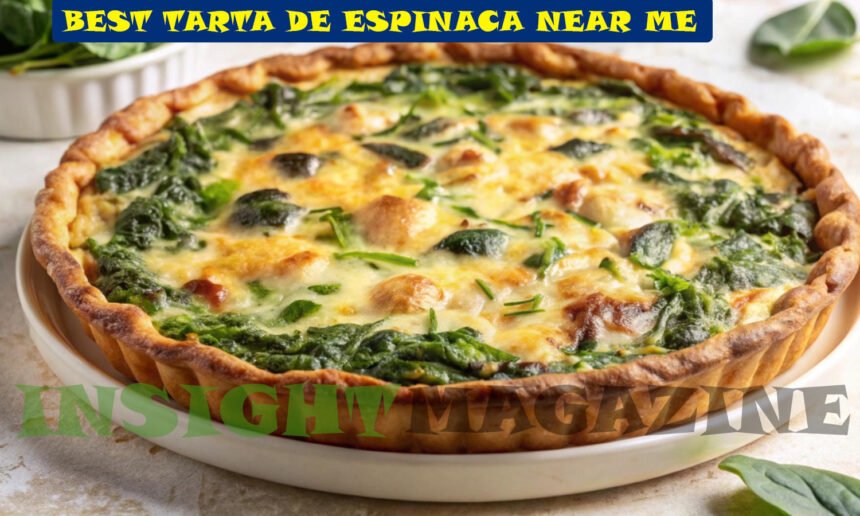
Searching for the best tarta de espinaca near me usually means you want a fresh, savory spinach tart rather than an ordinary vegetable pie. Tarta de espinaca is commonly prepared with spinach, pastry, eggs, onion, cheese, and seasonings, although recipes vary widely. Argentine recipes show versions with grated cheese, ricotta, several cheeses, rice, or even ham.
The best local choice depends on freshness, crust quality, filling, and the style you prefer. Some bakeries sell individual slices, while restaurants may prepare a complete tart for lunch or dinner. Because menus and daily bakery selections change, checking a current menu or contacting the business before traveling is sensible. This guide explains what tarta de espinaca is, where it comes from, and how to recognize a good one.
What Is Tarta De Espinaca?
Tarta de espinaca is a savory pastry filled mainly with spinach. There is no single recipe that every bakery or household follows. For example, an Argentine Nestlé recipe combines spinach with onion, rice, eggs and grated cheese inside two pastry layers. Another version from Cocineros Argentinos includes spinach with Gouda, Gruyère, blue cheese, eggs and milk.
This flexibility explains why searching for the best tarta de espinaca near me can produce very different dishes. One bakery may offer a simple vegetable-focused tart, while another may make a richer and creamier version. You can also encounter spinach-and-ricotta combinations. Foodit, for example, publishes a version combining spinach, onion, ricotta, egg and walnuts with a gluten-free homemade crust.
Early History and Connection to Pascualina
Tarta de espinaca does not have a personal biography or “early life,” but its culinary background connects closely with the tradition of vegetable-filled savory pies. One important related dish is torta pasqualina, or tarta pascualina. According to La Nación, this Italian-origin dish is associated with Genoa and Easter traditions and was known historically as “gattafura.”
Pascualina later became strongly established in Argentine cooking, where variations using spinach or Swiss chard, ricotta, eggs, onions and other ingredients developed. Modern tarta de espinaca does not always follow the traditional pascualina recipe, so the terms should not automatically be treated as identical. Still, searching both “tarta de espinaca” and “pascualina” can help you discover more relevant bakeries and restaurants.
How Tarta De Espinaca Is Made
The basic process starts with preparing the spinach and controlling its moisture. This is important because spinach releases water during cooking. A filling that contains too much moisture can leave the pastry soft rather than pleasantly baked. One published Argentine recipe specifically recommends draining spinach well to prevent the filling from becoming watery.
The prepared spinach is usually combined with ingredients such as onion, eggs and cheese before going into the pastry. Cooking methods vary considerably. Some recipes use one pastry base, while others cover the filling with a second layer. Baking times also depend on the recipe: published examples range from about 40 to 60 minutes.
How to Find the Best Tarta De Espinaca Near Me
A useful starting point is searching maps, bakery listings, restaurant menus and delivery services for “tarta de espinaca,” “spinach tart,” “spinach pie,” “tarta de verdura,” and “pascualina.” Using several terms matters because a bakery may sell exactly what you want without calling it tarta de espinaca in its English-language menu.
Pay attention to recent customer photos and reviews rather than relying only on an overall star rating. Look for comments about freshness, pastry texture, filling and portion size. If a menu does not clearly list the ingredients, contact the business directly. This is particularly important when you have dietary requirements or want to know whether the tart contains meat, specific cheeses, eggs or allergens.
What Makes a Good Spinach Tart?
A good tarta de espinaca should have a filling where spinach remains the central flavor. The pastry should support the filling without becoming excessively wet or heavy. A properly balanced amount of cheese can add richness, while onion, garlic, herbs and pepper can provide more depth. However, these ingredients are recipe choices rather than fixed requirements.
Freshness is equally important. When buying from a bakery, ask whether the tart was prepared that day and whether it is sold by the slice or as a complete pie. If you prefer a lighter meal, look for spinach-and-ricotta or vegetable-focused versions. People who enjoy richer flavors may prefer recipes containing multiple cheeses, creamier fillings or additional ingredients.
Ingredients, Nutrition and Dietary Choices
Spinach itself provides useful nutrients, but the nutritional profile of a finished tart depends on the entire recipe. Pastry, cheese, oil, eggs and portion size can significantly change its calories, fat, protein and sodium. For example, one Nestlé Argentina tarta de espinaca recipe reports 245 calories, 6.7 grams of protein and 12.3 grams of fat per serving, but those figures apply specifically to that recipe.
Do not assume every spinach tart is vegetarian, vegan or gluten-free. Some recipes contain ham, while traditional pastry normally contains wheat. Gluten-free versions are possible; Foodit publishes one using rice and chickpea flours. Anyone managing allergies or strict dietary requirements should confirm ingredients directly with the restaurant or bakery before ordering.
Popular Variations to Look For
One of the attractions of tarta de espinaca is how easily cooks can adapt it. A straightforward version may combine spinach, onion, eggs and grated cheese. Spinach and ricotta is another familiar pairing that produces a softer, creamier filling. Cheese lovers may encounter richer versions using several cheeses, while some recipes include ham and therefore are not vegetarian.
You may also find open-faced versions, double-crust pies and individual portions. Pascualina-style preparations can include whole eggs inside the green vegetable filling. Because there is so much variation, the “best” tart is largely a matter of preference. Check photographs and ingredient descriptions before choosing rather than assuming every spinach tart will taste or look the same.
Lifestyle, Popularity and Serving Ideas
Tarta de espinaca works well as a practical lunch or dinner because one tart can be divided into several portions. It can be served as the main dish alongside salad, vegetables or another simple side. Argentine food sources also describe vegetable tarts as foods that can be eaten at lunch or dinner and, depending on personal preference, hot or cold.
Its popularity also comes from versatility. Home cooks can adjust the vegetables, cheeses and pastry, while bakeries can sell it in convenient portions. Unlike a person or company, tarta de espinaca has no personal lifestyle, career, height, family, net worth or official social-media profile. Those details are therefore not applicable rather than information that can responsibly be invented.
Tips Before Ordering Tarta De Espinaca
Before placing an order, check whether the menu says spinach specifically or simply “vegetable tart.” Ask about the cheese, eggs, meat and pastry when those details matter to you. Recent photographs can help you judge crust thickness, filling-to-pastry ratio and portion size, although photographs cannot guarantee taste or current availability.
For takeaway, ask whether reheating instructions are available. A tart with pastry can lose some of its texture when stored improperly. If you are buying for several people, compare the price of individual slices with a whole tart. Most importantly, confirm current availability directly, since bakery selections and restaurant specials can change from one day to another.
Conclusion
Finding the best tarta de espinaca near me becomes easier when you know what you are looking for. A well-made spinach tart normally combines a flavorful spinach-based filling with pastry and ingredients such as eggs, onions, ricotta or other cheeses. Recipes vary, so there is no single version that can automatically be called the best.
Search local Argentine or Latin American bakeries, cafés and restaurants using both Spanish and English terms. Compare recent reviews and photos, then confirm ingredients and availability before visiting. Whether you prefer a simple spinach filling, creamy ricotta or a pascualina-style tart, freshness and good pastry are sensible qualities to prioritize.
FAQs
1. What is tarta de espinaca?
Tarta de espinaca is a savory spinach tart or pie. Common recipes combine spinach with eggs, onion, cheese and pastry, although the exact ingredients vary. Some versions contain ricotta, several cheeses, rice or additional vegetables. Others may contain ham, so you should not automatically assume every spinach tart is vegetarian.
2. How can I find the best tarta de espinaca near me?
Search local maps, restaurant menus, bakeries and delivery platforms using terms such as “tarta de espinaca,” “spinach tart,” “spinach pie,” “tarta de verdura” and “pascualina.” Check recent photographs and customer feedback, particularly comments about freshness and pastry. Because daily menus can change, contact the bakery or restaurant to confirm that spinach tart is currently available before making a special trip.
3. Is tarta de espinaca the same as pascualina?
Not necessarily. They are closely related types of savory vegetable pies, but pascualina has a specific historical connection to the Italian torta pasqualina. In Argentina, pascualina commonly uses spinach or Swiss chard and may contain ricotta and eggs. Modern tarta de espinaca is a broader description and can refer to many different spinach-filled tart recipes.
4. Is tarta de espinaca vegetarian?
Many versions are vegetarian because their filling consists mainly of spinach, eggs, cheese and vegetables. However, this cannot be assumed. Some published recipes include ham, while others use only vegetables and dairy products. Vegans should also check carefully because eggs and dairy cheese are common. Always ask the seller about ingredients when following a specific diet.
5. Can tarta de espinaca be gluten-free?
Yes, but traditional pastry should not be assumed to be gluten-free. Special recipes can replace ordinary wheat flour with alternatives. For example, a Foodit spinach-and-ricotta tart recipe uses rice flour and chickpea flour for its crust while advising cooks to verify that ingredients are suitable for people with celiac disease. At a restaurant or bakery, confirm preparation practices directly if avoiding gluten for medical reasons.
Visit For More Info : Insight Magazine