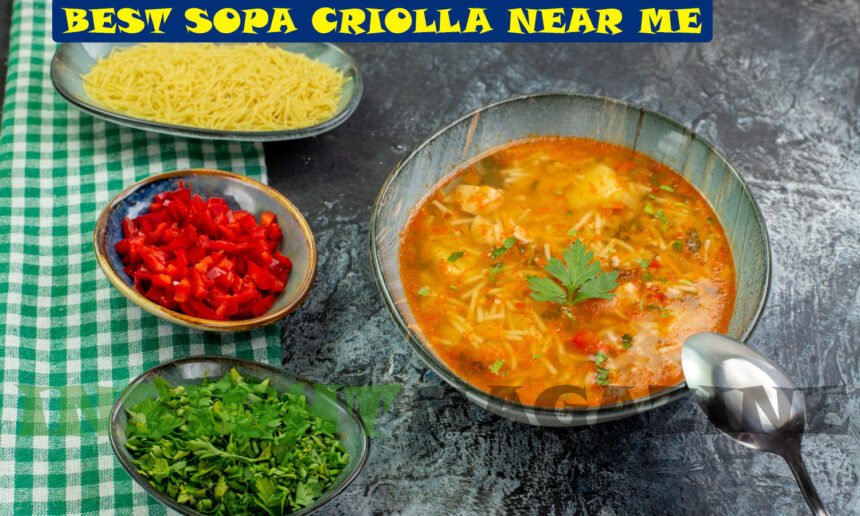
Searching for the best sopa criolla near me usually means you want more than an ordinary bowl of soup. Sopa criolla is a traditional Peruvian comfort dish built around beef, noodles, a seasoned broth, ají panca, and usually milk or evaporated milk. Eggs and bread are also common accompaniments. Recipes differ slightly between cooks and restaurants, but these ingredients create the rich, warming character associated with the dish.
Finding authentic sopa criolla can be harder than finding famous Peruvian dishes such as ceviche or lomo saltado. A local search does not always reveal restaurants that specifically list the soup online, and menus can change. Instead of assuming that every Peruvian restaurant serves it, check current menus or contact the restaurant before visiting. This guide explains what sopa criolla is, what an authentic bowl usually contains, and how to make a better local search.
What Is Sopa Criolla?
Sopa criolla is a hearty Peruvian beef-and-noodle soup. A traditional preparation commonly starts by cooking beef and building a flavorful base with onion, garlic, tomato, ají panca, and seasonings. Beef broth is then added, followed by thin noodles. Milk or evaporated milk gives the finished soup its recognizable richness. A recipe shared by Peruvian newspaper El Comercio also includes eggs, oregano, and fried bread.
The dish belongs to Peru’s broader criollo cooking tradition. Some published accounts connect its development with Lima’s colonial culinary history and later European influences, including the use of pasta alongside Peruvian ingredients. The exact moment or individual responsible for creating sopa criolla is not publicly confirmed. What is clear is that today’s dish combines ingredients such as ají panca with beef, noodles, tomato, dairy, and aromatic seasonings.
History and Culinary Background of Sopa Criolla
Unlike a person or celebrity, sopa criolla does not have an “early life” or career. Its background is better understood through the history of Peruvian Creole cooking. Tottus Peru describes sopa criolla as a classic preparation connected with Lima’s colonial tradition and notes Spanish and Italian influences in its evolution. Beef, bread, and noodles appear alongside local ingredients such as ají panca, onion, and garlic.
That combination helps explain why the soup feels both familiar and distinctly Peruvian. Pasta gives it the comforting character of a noodle soup, while ají panca contributes an important Peruvian flavor. Modern versions are not completely standardized. Some use diced steak, while others use ground beef. Potatoes appear in certain recipes but not others, and cooks may prepare the egg differently. These variations mean authenticity should be judged by the overall preparation rather than one rigid ingredient list.
What Makes the Best Sopa Criolla Near Me?
A good bowl should have a flavorful broth rather than tasting mainly of milk or noodles. Ají panca is especially important because it adds depth and helps distinguish sopa criolla from a generic beef noodle soup. Published Peruvian recipes regularly combine it with onion, garlic, tomato, beef broth, noodles, oregano, and dairy. The noodles should remain pleasant to eat instead of becoming overly soft after sitting in hot broth.
Balance matters just as much as individual ingredients. The beef should contribute savory flavor, while tomato, aromatics, and chile create a fuller base. Milk adds richness without turning the dish into a heavy cream soup. Depending on the restaurant, an egg may be cooked in the soup or served with the finished bowl. Bread can also accompany it. These small differences are normal, so a slightly different presentation does not automatically make the dish inauthentic.
How to Find Authentic Sopa Criolla Near You
Start by searching specifically for Peruvian restaurants rather than broadly searching for Latin American food. Then inspect each restaurant’s current menu for “sopa criolla” or “sopa a la criolla.” Restaurant websites, current menu pages, map listings, and recent customer photos can help. Because soup selections may change, calling the restaurant before traveling is one of the most reliable ways to confirm whether sopa criolla is being served that day.
A search around the user’s current area did not produce a reliable restaurant listing that specifically confirmed sopa criolla on its menu, so naming a nearby restaurant as the “best” would be unsupported. Broaden the search radius if necessary, especially if Peruvian restaurants are uncommon where you live. Search terms such as “Peruvian restaurant near me,” “Peruvian soup near me,” and “sopa a la criolla” may reveal options that the exact phrase “best sopa criolla near me” misses.
Ingredients to Look for in Authentic Sopa Criolla
Although recipes vary, several ingredients appear consistently in credible Peruvian preparations. Martha Palacios’s recipe published by El Comercio Perú uses finely chopped beef steak, red onion, garlic, tomato, ají panca, beef broth, angel hair noodles, eggs, evaporated milk, bread, oregano, salt, and pepper. This is a useful reference when comparing a restaurant description with a recognizable Peruvian preparation.
Another Peruvian recipe from Tottus Perú follows a similar pattern, using beef, onion, garlic, ají panca, tomato, beef broth, angel hair noodles, eggs, evaporated milk, and oregano. These sources show that individual quantities and techniques can change without altering the basic identity of the dish. If a restaurant provides only a short menu description, look for beef, noodles, ají panca, tomato, dairy, and egg as strong signs of the traditional style.
Taste, Texture, and Serving Style
Sopa criolla should feel substantial enough to work as more than a light starter. Beef and broth create its savory foundation, noodles provide body, and milk softens and enriches the soup. Ají panca brings chile flavor and color, while oregano adds another aromatic layer. The exact level of heat depends on the preparation, so diners should not assume that every bowl will be extremely spicy simply because it contains Peruvian chile paste.
Texture is another useful quality indicator. Ideally, the beef remains enjoyable, the noodles are cooked properly, and the broth brings all the ingredients together without becoming excessively thick. Eggs add extra richness and protein. Some preparations serve fried bread separately or place bread alongside the bowl. Since sopa criolla is designed as warming comfort food, it is best served hot and eaten reasonably soon after preparation, particularly because thin pasta continues absorbing liquid.
Sopa Criolla Compared With Other Peruvian Soups
Peruvian cuisine includes many soups, so seeing “Peruvian soup” on a menu does not necessarily mean sopa criolla. What makes this dish recognizable is the combination of beef, thin noodles, tomato-based seasoning, ají panca, dairy, and frequently egg. This particular mixture gives it a different identity from clear broths, seafood soups, or recipes centered mainly on potatoes and vegetables.
If a restaurant does not have sopa criolla, ask whether it appears as a seasonal special rather than immediately choosing a similarly named dish. Restaurants may rotate soups or offer dishes that are not shown on third-party menu pages. When authenticity matters, asking about ingredients is useful. A restaurant should be able to explain its version, especially whether it contains beef, ají panca, noodles, milk, and egg or whether it uses a house variation.
Lifestyle, Popularity, and Online Presence
Sopa criolla has no personal lifestyle, career, height, family, net worth, or relationship status because it is a dish rather than a person. Those details are therefore not applicable. Its cultural importance comes from its place within Peruvian food traditions and its role as a hearty meal. Published Peruvian recipes describe it as a substantial soup suitable for cooler weather and family dining.
The dish also has no official universal social-media account. Restaurants, cooks, food publications, and home chefs may share their own versions online, but these should not be treated as a single official source. For dependable information, established Peruvian publications and detailed recipes are more useful than unattributed social posts. When choosing somewhere to eat, current restaurant menus remain more important than old photos because dishes and availability can change without notice.
Conclusion
Finding the best sopa criolla near me begins with knowing what you are looking for. Traditional versions generally combine beef, beef broth, thin noodles, onion, garlic, tomato, ají panca, oregano, and milk or evaporated milk, often with egg and bread. Reliable Peruvian recipes confirm this basic structure while also showing that variations are normal.
For the most useful local results, search for dedicated Peruvian restaurants, check their latest menus, read recent information, and confirm availability directly before making a special trip. Do not assume a restaurant serves sopa criolla simply because it offers Peruvian food. A little menu research makes it much easier to find a bowl that reflects the rich, warming character of this traditional Peruvian soup.
FAQs
1. What is sopa criolla made from?
Traditional recipes commonly contain beef, beef broth, angel hair noodles, onion, garlic, tomato, ají panca, oregano, and milk or evaporated milk. Egg and bread are also common. Exact ingredients can vary between households and restaurants, so there is no need to expect every bowl to look identical.
2. Is sopa criolla a Peruvian dish?
Yes. Sopa criolla is associated with Peruvian Creole cuisine. Peruvian sources describe it as a classic soup connected with Lima’s culinary tradition. Its combination of European-influenced ingredients such as noodles with Peruvian ingredients including ají panca reflects the blended character found in much of Peru’s criollo cooking.
3. Is sopa criolla spicy?
It contains ají panca in many traditional recipes, but the actual heat level depends on how the soup is prepared. Ají panca contributes flavor and color as well as chile character. If you are sensitive to spicy food, ask the restaurant about its recipe and heat level before ordering rather than assuming every version tastes the same.
4. How can I find the best sopa criolla near me?
Search for Peruvian restaurants nearby and check their current menus for “sopa criolla” and “sopa a la criolla.” If online menus do not provide an answer, contact restaurants directly. Current confirmation is important because soups may be seasonal, offered only on certain days, or available as specials that do not appear on older online menus.
5. What should good sopa criolla taste like?
A well-prepared sopa criolla should have a savory, aromatic beef broth with noticeable depth from tomato, onion, garlic, oregano, and ají panca. Dairy should make the broth richer without overpowering it, while the noodles and beef provide a hearty texture. Egg and bread can add another satisfying layer, depending on the restaurant’s preparation.
Visit For More Info : Insight Magazine