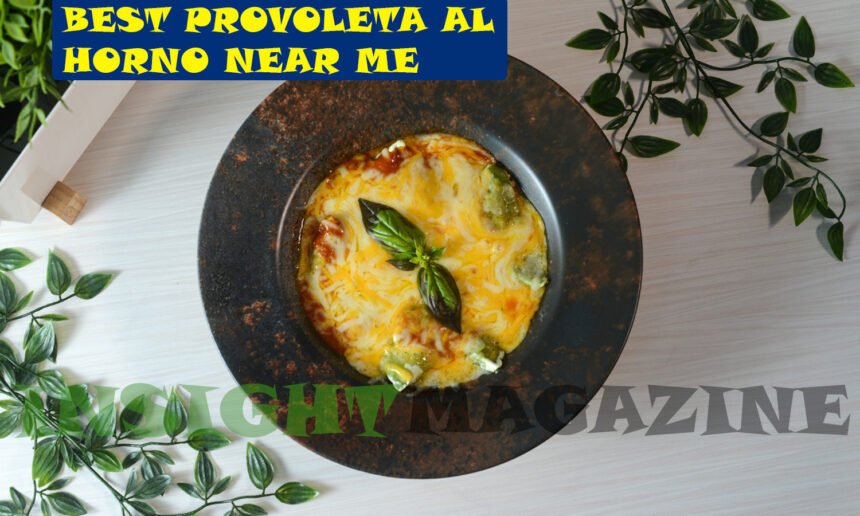
Searching for the best provoleta al horno near me usually means one thing: you want hot, melted cheese with a browned surface, a soft center, and enough flavor to make it worth ordering as an appetizer. Provoleta is closely connected with Argentine food culture, especially the traditional asado. It is based on provolone-style cheese developed specifically to handle high heat while keeping some structure.
Finding authentic provoleta can be harder outside Argentina. A local search around the user’s area did not surface a clearly verified restaurant currently listing provoleta al horno, so naming one as the “best” would be misleading. Instead, this guide explains what genuine provoleta is, what good oven-baked provoleta should look like, and how to recognize the strongest option when checking Argentine steakhouses, Latin American restaurants, or specialty menus nearby.
What Is Provoleta al Horno?
Provoleta is an Argentine preparation built around a form of provolone designed to tolerate intense cooking heat. Traditional provoleta is strongly associated with the grill and is commonly served at the beginning of an Argentine asado. The cheese softens inside while developing a browned exterior rather than simply disappearing through the grill. Argentine food sources trace this adaptation to Italian immigrant Natalio Alba, who experimented with provolone in Argentina around 1940.
“Al horno” simply refers to preparing the dish in an oven rather than directly over a parrilla. Modern oven recipes commonly place a thick piece of cheese in a small oven-safe dish or cazuela and cook it at high heat. A typical preparation uses oregano, black pepper and a little olive oil, while chili flakes, tomatoes, olives, basil and other toppings can appear as variations.
Early History and Origin of Provoleta
The early life of provoleta is really a story of migration and culinary adaptation. Natalio Alba was an Italian immigrant from Calabria who settled in Argentina before World War II. According to accounts of the dish’s history, he eventually became involved in cheese production and experimented with varieties including provolone. He saw an opportunity to connect the Italian cheese tradition he knew with Argentina’s strong culture of cooking over fire.
Around 1940, Alba developed a provolone variation better suited to Argentine grilling. The pulling or stretching process helped give the cheese the structure needed to withstand heat. The Argentine product later became formally recognized as “queso provolone hilado argentino.” This combination of Italian cheesemaking influence and Argentine asado culture explains why provoleta occupies such a distinctive place in the country’s cuisine.
How Provoleta Became an Argentine Food Success
Provoleta’s major success came from solving a simple cooking problem: ordinary cheese can melt too quickly when exposed to intense heat. The Argentine version was developed with a firmer structure that could soften while remaining manageable. That characteristic allowed cooks to produce the contrast that defines a good serving—browned or crisp areas outside and warm, melted cheese inside.
It also fitted naturally into the social structure of an asado. Instead of replacing grilled meat, provoleta became an appetizer that people could share while other food cooked. Traditional servings may be seasoned with oregano, chili or chimichurri and eaten with bread. Today, restaurants and home cooks use skillets, small baking dishes and ovens as well as traditional grills, making the dish accessible without an Argentine parrilla.
What the Best Provoleta al Horno Should Be Like
When comparing results after searching “best provoleta al horno near me,” texture deserves more attention than an elaborate list of toppings. Properly prepared provoleta should arrive hot enough for the center to be soft and melted. At the same time, high heat should create golden or lightly crisp areas on the surface and around the edges. An oven preparation can achieve this contrast when the cheese is cooked quickly rather than left to dry out.
Strong versions also keep the seasoning balanced. Oregano and black pepper are simple choices because they complement rather than cover the cheese. Chili can add heat, while tomatoes, olives or herbs provide contrast. Some recipes suggest roughly 200–220°C for oven preparation and a short cooking time, followed by brief grilling or broiling for extra browning.
How to Find the Best Provoleta al Horno Near Me
Start with restaurants specializing in Argentine cuisine rather than assuming any place serving provolone will prepare authentic provoleta. Search menu terms such as “provoleta,” “provolone a la parrilla,” “provoleta al horno,” “Argentine grilled cheese,” and “queso provolone.” Photos can also be useful: look for a thick round portion served bubbling in a small skillet or heatproof dish rather than ordinary sliced provolone.
Check the current menu before travelling because specialty appetizers can change. Local search results around the user’s present area did not provide enough evidence to confirm a nearby restaurant serving authentic provoleta al horno. That does not prove none exists; it means there is not enough reliable public information to recommend a specific local restaurant without guessing.
Traditional Provoleta vs Provoleta al Horno
Traditional provoleta is most closely connected with the parrilla. The cheese was specifically developed so it could tolerate grilling and form a flavorful exterior without immediately losing its shape. Some preparations put it directly over heat, while others use foil, a metal surface, or a dedicated provoletera. Chimichurri, oregano and chili are familiar accompaniments, and bread makes the melted cheese easy to share.
Provoleta al horno follows the same basic idea but uses an oven-safe pan or cazuela. The method is convenient for restaurants and home kitchens without charcoal grills. A hot oven melts the center, while direct top heat near the end can increase browning. The cooking equipment changes, but the central attraction remains the same: intensely savory cheese served immediately while hot.
Ingredients, Serving Style, and Lifestyle Around Provoleta
A straightforward provoleta al horno does not require many ingredients. One published Argentine-style oven recipe uses a thick slice of provoleta with oregano, black pepper, optional ground chili and olive oil. Tomatoes, fresh basil, olives and even a small amount of honey are suggested as optional additions rather than requirements. The finished cheese can be accompanied by crusty bread, focaccia or toast.
Its cultural “lifestyle” is communal rather than formal. Provoleta became associated with the Argentine asado, where food is cooked and shared socially among family or friends. It generally appears near the beginning of the meal rather than as a standalone main course. That background explains why restaurant portions are often designed for sharing and why simple bread makes such a natural companion.
Is Provoleta the Same as Regular Provolone?
They are related, but treating the names as completely interchangeable can cause confusion. Provoleta developed from provolone traditions, yet Argentine provoleta was adapted specifically for high-heat cooking. Sources describing the Argentine version identify it as a pulled-curd or “hilado” provolone with properties that help it retain structure as it heats.
That distinction matters when making the dish at home. A random thin slice of sandwich provolone may melt differently from a thick piece intended for grilling. When shopping, look for Argentine provoleta, grilling provolone, or a sufficiently firm provolone sold in a thick piece. For restaurant diners, the finished texture is an equally useful test: melted inside, browned outside, and sturdy enough to scoop onto bread.
Why Provoleta Is Worth Trying
Provoleta stands out because the dish gets considerable flavor from very few components. Cheese, heat and restrained seasoning produce contrasting textures without requiring a complicated recipe. Its history is equally interesting: Italian cheesemaking traditions were adapted to suit Argentine grilling culture, creating something that became strongly associated with the country’s own food identity.
For someone searching for the best provoleta al horno near me, an Argentine steakhouse is therefore a sensible place to begin. Look beyond ratings alone and inspect the menu description, preparation method and recent food photographs. A simple provoleta prepared properly can be more authentic and satisfying than an overloaded version where toppings hide the character of the cheese.
Conclusion
The best provoleta al horno near me should deliver the qualities that made this Argentine dish popular in the first place: deeply savory cheese, a hot and soft center, browned edges, simple seasoning, and a serving style made for sharing. Provoleta grew from Italian cheesemaking traditions but developed its own identity through Argentina’s asado culture, particularly through the work credited to Natalio Alba.
When choosing a restaurant, prioritize a genuine Argentine or parrilla-style preparation and verify the current menu instead of relying only on search rankings. If no authentic local option is available, provoleta al horno is also relatively simple to prepare at home with the right cheese, a hot oven, restrained seasoning, and crusty bread served alongside.
FAQs
What is provoleta al horno?
Provoleta al horno is an oven-cooked version of the Argentine provoleta dish. A thick piece of suitable provolone-style cheese is placed in an oven-safe dish and heated until the center becomes soft and the exterior begins to brown. Oregano, pepper, chili and olive oil are common seasonings, while bread is a popular accompaniment.
Where can I find the best provoleta al horno near me?
Check Argentine steakhouses, parrillas and Latin American restaurants first. Search current menus specifically for “provoleta” or “provoleta al horno.” No nearby establishment surfaced in the local search with enough reliable menu evidence to confirm that it currently serves authentic provoleta, so checking the restaurant’s latest menu before visiting is important.
What cheese is used for provoleta?
Authentic Argentine provoleta is associated with Queso Provolone Hilado Argentino, a provolone-derived cheese designed for high-temperature cooking. Its pulled-curd production helps create the structure needed for grilling while allowing the inside to soften.
Is provoleta usually grilled or baked?
Grilling is the method most strongly connected with traditional Argentine asado, but provoleta can also be prepared indoors in a skillet or baked in an oven. Oven versions commonly use a small heatproof dish and high temperature to create melted cheese with browned edges.
What should I eat with provoleta al horno?
Crusty bread is one of the easiest accompaniments because it works well with the hot melted cheese. Chimichurri is also associated with traditional servings, while modern oven versions may include tomatoes, olives, basil or other simple additions. The goal is usually to complement the cheese rather than overpower it.
Visit For More Info : Insight Magazine